‘75% of millennials would rather lose their ability to talk versus text’ writes Media post in a recent survey that questioned millennials about their communication preferences. This made me think about my preference and I also find myself preferring to text over making a phone call. As a fulltime university student who also juggles a fulltime job, casual work on the weekend, exercise, sleep and socialising, it is a lot more convenient for me to simply send a text. So how do mobile phones affect conversation between friendship’s in millennials?
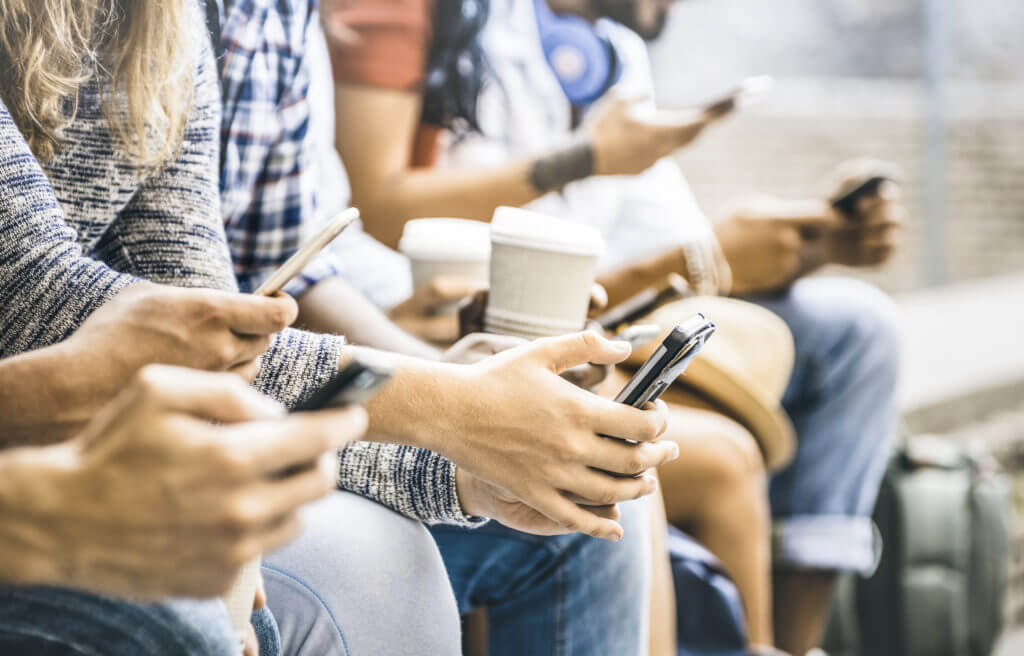
Communication avoidance is not a new term being discussed. There many different types from taking a vow of silence to banning digital screens in homes. But in the ages of new technologies, there are many more ways in which communication avoidance can take place and new devices to help us do so.
The topic of communication avoidance is extremely relevant in todays society. Almost everyone owns a phone and most of these people who own one, would rather text or send an email than have a conversation face to face. Sherry Turkle explains that “We live in a technological universe in which we are always communicating. Yet we sacrifice conversation for mere connection”. But why is it that there is a lack of face to face communication in our day to day lives? Is it due to the many ways in which there are to avoid a phone calls such as simply not answering our phones, turning off the ringer, turning off the power, stuffing it in your back pocket, leaving it at home? (Plaut, 2014) Or is it at an attempt to better control our time, allow for convenience, a way to remember things and for us to multitask and survive our busy lives? (Paldesk, 2019) We can also choose when to respond to a text message or to totally ignore it.
There are many reasons why communication avoidance is a topic worth investigating and one that matters in the world we live in. Mental health is becoming more and more prevalent and is a topic that is highly spoken about in the media. There are plenty of platforms available with information about how to assist and seek help, though I feel there is not enough information available about some of the causes which are affecting people suffering from these problems. Mental health issues such as depression and social anxiety can be a direct cause of communication avoidance. This is due to the ease of access to phones where people can text instead of talking. People are becoming more and more comfortable with this form of communicating and no longer know how to have a conversation (Blair et al, 2013). By avoiding this face to face contact, anxiety around social events will never diminish. We must use phones mindfully while also finding a balance in order to not become complacent.
So what impact does this communication avoidance have on human empathy? A study by Sherry Turkle, suggests that social media and the kind of ‘flight from conversation’ mentality can leave us without the skills to feel empathy. She says, ‘Face to Face conversation is the most human and the most humanising thing that we do’, though we live in a society that is confusing connectivity with communication. We are together, but we are all in our own little bubble connected to keyboards and screens providing the misconception of companionship without the demands of relationship. Are we facing a crisis in empathy? And what result is this having on our day to day lives? As we choose to text and avoid calls more we are avoiding the notion that texts and emails do not substitute for communication. When we choose to text instead of talking to friends, we learn different habits and lose the patience that face to face conversations teaches us.
The article ‘Are we confusing connectivity with communication?’ suggests that ‘modern communications are destroying meaningful communication.’ In today’s age we are communicating more than we ever have in the past as a result of new technologies, but how much substance is being listened to and absorbed? In the UK alone, 10% of 5 year olds own a phone and by the age of ten, this number increases to 75%! ‘Globally, communicating via voice is falling through the floor, while communicating via data (text and pictures essentially) is going through the roof’ (Richard, 2014). While the ease and convenience of texting allows us to have much greater control over our conversations, we lose tones in voice as well as body language allowing for immeasurable misunderstanding (Hall and Baym, 2014).

The survey conducted by Media Post, reveals that people do in fact prefer to text over making a phone call. The reason being? 76% of people say texts are more convenient, 63% thinks texts are less disruptive than a phone call, 53% of people prefer to text over call in general and 19% of people never check voicemails. Another interesting point that was made was that 75% of millennials find texts relating to product offers, potential fraud alerts, delivery notifications and general appointment reminders helpful as they are a way of remembering and allows for convenience for people who may be time poor (Sarla,2020).
For this project, I will answer the question ‘How do mobile phones affect conversation between millennial friendships’ by continuing to research studies that offer information about the preference for texting over talking and the effect of communication avoidance. I will also conduct a series of surveys to find out how millennials prefer to communicate, if people use texting as a way to avoid conversations and if communicating by text causes them to feel less engaged and connected in their conversations.
References:
- Blair et al, 2013. ‘Cell Phone Decision Making: Adolescents’ Perceptions of How and Why They Make the Choice to Text or Call’. Sage Journals. Available at: https://journals.sagepub.com/doi/abs/10.1177/0044118X13499594 Accessed: 25 March 2021.
- Cuncic, 2020. ‘Avoidance Behaviors and Social Anxiety Disorder’. Verywellmind. Available at: https://www.verywellmind.com/what-are-avoidance-behaviors-3024312 Accessed: 26 March 2021.
- Hall and Baym, 2011. ‘Calling and texting (too much): Mobile maintenance expectations, (over)dependence, entrapment, and friendship satisfaction’. Sage Journals. Available at: https://journals.sagepub.com/doi/abs/10.1177/1461444811415047 Accessed: 25th March 2021
- ‘How Does Technology Affect Mental Health?’. Bradley University. Available at: https://onlinedegrees.bradley.edu/blog/how-does-technology-affect-mental-health/ Accessed 27 March 2021.
- Loechner, 2016. ‘Text Vs Talk gets Millenials attention’. Research Brief. Available at: https://www.mediapost.com/publications/article/275332/text-vs-talk-gets-millennials-attention.html Accessed: 25th March 2021.
- Malinen et al, 2018. ‘Exploring Selective Exposure and Selective Avoidance Behavior in Social Media’. Research gate. Available at: https://www.researchgate.net/publication/326452273_Exploring_Selective_Exposure_and_Selective_Avoidance_Behavior_in_Social_Media Accessed 26 March 2021.
- Plaut, 2014. ‘Technologies of Avoidance: The Swear Jar and the Cell Phone. Available at: https://firstmonday.org/ojs/index.php/fm/article/download/6295/5127?inline=1#author Accessed 27 March 2021.
- Sarla, 2020. ‘Texting or Calling: A Comparison’. Research Gate. Available at: https://www.researchgate.net/profile/Gurmeet-Sarla-2/publication/343601155_Texting_or_Calling_A_Comparison/links/5f33a37fa6fdcccc43c2114d/Texting-or-Calling-A-Comparison.pdf Accessed 26 March 2021.
- Smith and Foster, 2014. ‘Communication Avoidance in the Age of Mobile Devices’. Psychology Today. Available at: https://www.psychologytoday.com/us/blog/reinvent-yourself/201411/communication-avoidance-in-the-age-mobile-devices Accessed 26 March 2021.
- Turkle, 2012. ‘The Flight From Conversation’. Research Gate. Available at: https://www.researchgate.net/publication/265061374_The_Flight_From_Conversation Accessed 26 March 2021.
- 2014. ‘Are we confusing connectivity with communication?’. Available at: https://toptrends.nowandnext.com/2014/11/05/are-we-confusing-connectivity-with-communication/ Accessed: 25 March 2021.
- 2019. ‘Why Do People Rather Text Than Talk?’ Paldesk. Available at: https://medium.com/@paldesk/why-do-people-rather-text-than-talk-a0a87d00d517 Accessed: 27 March 2021.

 Tahlia's Blog